Responsible Tourism & the UN Sustainable Development Goals: How Travel Drives Global Progress
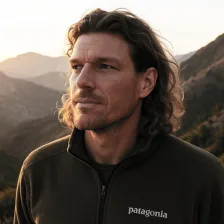
By Steven Keen
MSc candidate in Responsible Tourism Management, GSTC- and ICRT-certified.
17 min read Updated: Verified:
Tourism isn’t just an industry—it’s a powerful tool for achieving the world’s most ambitious goals. From ending poverty to protecting oceans, tourism touches all 17 UN Sustainable Development Goals (SDGs). Here’s how.
Key Takeaways
- Tourism is named in three SDG targets—8.9, 12.b, 14.7—and connects to all 17.
- It’s a major job creator in developing economies—central to ending poverty (SDG 1) and decent work (SDG 8).
- Impact only counts when it’s measured against real indicators, not marketing claims.
- Operators can map concrete actions to SDG targets and report against them.
The Tourism-SDG Connection
In 2015, all 193 UN member states adopted the 2030 Agenda for Sustainable Development1—a universal blueprint for peace and prosperity. At its heart are 17 Sustainable Development Goals (SDGs), each addressing critical challenges from poverty and inequality to climate change and biodiversity loss.
Tourism is explicitly mentioned in three SDG targets:2
- SDG 8.9 Devise and implement policies to promote sustainable tourism that creates jobs and promotes local culture and products.
- SDG 12.b Develop and implement tools to monitor sustainable development impacts for sustainable tourism that creates jobs and promotes local culture and products.
- SDG 14.7 By 2030, increase the economic benefits to Small Island Developing States (SIDS) and least developed countries from the sustainable use of marine resources, including through sustainable management of fisheries, aquaculture, and tourism.
But these three targets only scratch the surface. UN Tourism (formerly UNWTO) identified tourism as a meaningful contributor to all 17 SDGs.3 Why? Because tourism is uniquely positioned to drive change:
- It directly engages communities—from remote villages to megacities
- It generates foreign exchange, especially for developing nations
- It creates economic incentives to protect natural and cultural heritage
- It facilitates cross-cultural understanding and peace
- It offers low-barrier entry for women, youth, and marginalized groups
The question is not whether tourism affects the SDGs—it’s whether that effect is positive or negative. That is exactly what responsible tourism is: it’s the discipline that makes it positive by design rather than by accident.
to Be Tourists
THE FIELD GUIDE · FREE · NO EMAIL
Refuse to Be a Tourist
You can’t buy a responsible trip—you can only make one. Eleven evidence-based pages that turn responsible travel into a method you can actually use. Free and yours to keep.
Get the free guideTourism Across All 17 Goals
Explore tourism’s connection to every goal below—and see how few of them name it outright. Only three of the 169 targets do: 8.9, 12.b, and 14.7.2 Every other link in the matrix is a contribution UN Tourism has mapped,3 not a commitment the text of the 2030 Agenda itself makes.
Select one of the 17 SDGs
Reveal its official UN color and see how tourism connects to it. Only three SDGs—SDG 8, SDG 12, and SDG 14—explicitly mention tourism.
Embed this graphic
Free to embed. The embed keeps a visible credit linking back to this page.
SDGs Where Tourism Makes the Biggest Difference
While tourism touches all 17 goals, its impact is most direct and measurable in the following areas. Each section explains the connection, provides real-world examples, and offers best practices for travelers and operators.
SDG 1: No Poverty
Tourism is one of the few industries capable of bringing jobs and income directly to rural and coastal communities where formal employment is scarce. When visitors stay in a mountain village or eat at a family-run taverna, money flows directly to the people who need it most.
Real-world examples: In Nepal, the Annapurna Conservation Area—the country’s largest protected area, home to more than 100,000 residents—is run by a trust that gets no regular government funding for it: it collects an entry fee from every trekker instead, and that revenue goes back into the region, its resources, and its community.4 Agritourism on Crete connects farmers with travelers who buy directly from them.
Best practices: Hire locally. Prioritize local procurement for food, supplies, and services. Pay fair wages above the regional minimum. Support community-owned enterprises rather than building competing operations.
SDG 5: Gender Equality
Women make up 54% of the global tourism workforce according to UN Tourism and UN Women5—well above the roughly 39% share women hold across the wider global economy5—though their representation varies significantly by region and they remain disproportionately concentrated in lower-skilled, lower-paid positions. Responsible tourism actively works to change this by creating leadership opportunities and ensuring equal compensation.
Real-world examples: Kerala’s state Responsible Tourism Mission names women’s empowerment among its main aims—and then counts it: 70 percent of its 17,631 registered units are women-owned or women-led.6
Best practices: Ensure equal pay for equal work. Create pathways to leadership and management positions. Maintain safe working environments free from harassment. Support and promote women-owned tourism businesses.
SDG 8: Decent Work and Economic Growth
Tourism accounts for roughly one in ten jobs worldwide.7 But job creation alone is not enough—the quality of those jobs matters just as much. Seasonal, informal, or exploitative tourism employment does not advance the SDGs. Decent work means stable employment, fair wages, and opportunities for professional growth.
Real-world examples: Year-round employment programs in off-season destinations reduce the feast-or-famine cycle. Skill-building programs in hospitality create career paths rather than dead-end positions. Fair trade tourism certification (such as Fair Trade Tourism in South Africa) ensures operators meet labor standards.8
Best practices: Offer permanent contracts instead of seasonal-only employment. Invest in staff training and professional development. Pay living wages, not just minimum wages. Support local artisans and suppliers as part of the tourism value chain.
SDG 10: Reduced Inequalities
Tourism can bridge divides—between urban and rural economies, between wealthy visitors and low-income communities, between able-bodied travelers and those with disabilities. But it can also deepen them, through gentrification, displacement, and exclusion. The difference lies in how tourism is designed and managed.
Real-world examples: Accessible tourism for people with disabilities opens destinations to millions of previously excluded travelers. Indigenous-led tourism in Canada keeps ownership and earnings inside the community: Spirit Bear Lodge in Klemtu, British Columbia, is owned and operated by the Kitasoo Xai’xais First Nation.9
Best practices: Design tourism experiences with inclusive access from the start—not as an afterthought. Ensure equitable benefit-sharing between operators and communities. Actively prevent tourism-driven displacement and gentrification. Involve marginalized groups in tourism planning and decision-making.
SDG 11: Sustainable Cities and Communities
Tourism can revitalize neighborhoods, fund public infrastructure, and celebrate cultural identity. It can also cause overtourism—overwhelming residents, degrading public spaces, and converting housing into short-term rentals. Sustainable cities need tourism management that puts residents first—the case for that ordering, and the rights behind it, is made in full in overtourism and residents’ rights.
Real-world examples: In Amsterdam, an ordinance that began as a residents’ initiative caps tourism itself—a bandwidth of 10 to 20 million overnight stays a year, with tourist pressure measured district by district and residents surveyed on how they experience it.10 Pedestrianization of historic city centers (like Ljubljana)11 improves quality of life for residents and visitors alike.
Best practices: Develop destination management plans with genuine resident input. Implement visitor caps during peak periods. Invest tourism revenue directly in public services—transit, parks, sanitation. Encourage dispersal to lesser-visited areas rather than concentrating visitors in hotspots.
SDG 12: Responsible Consumption and Production
Tourism consumes enormous amounts of water, energy, food, and materials. A single resort can use more water per day than an entire village.12 Responsible consumption in tourism means adopting circular economy principles—reducing waste at the source, reusing materials, and sourcing locally.
Real-world examples: In the EU the floor is no longer a matter of goodwill: since July 3, 2021, the single-use plastics that hospitality once handed out by default—plates, cutlery, straws, beverage stirrers, and expanded-polystyrene cups and food containers—may not be placed on the market at all.13
Best practices: Measure and publicly report waste, water, and energy consumption. Source food locally and organically wherever possible. Offer plant-based and vegetarian menu options as defaults, not exceptions. Adopt circular economy principles—repair, reuse, and recycle before discarding.
SDG 13: Climate Action
Tourism is responsible for an estimated 8–9% of global greenhouse gas emissions14 (about 8.8% as of 2019),15 with transport—especially aviation—accounting for the largest share. This is the most uncomfortable truth for the travel industry: the very act of traveling long distances contributes to the climate crisis. Responsible tourism confronts this honestly.
Real-world examples: Train travel campaigns across Europe encourage visitors to skip flights for overland journeys. Direct investment in renewable energy and rail infrastructure cuts emissions at source, which offsetting does not: most forest-carbon projects studied did not significantly reduce deforestation,16 and from September 27, 2026, EU law bans product-level “carbon neutral” claims based on offsetting.17 Solar-powered accommodations eliminate fossil fuel dependence. Slow travel movements encourage longer stays in fewer destinations.
Best practices: Prioritize low-carbon transport—trains, buses, cycling, walking. Reduce short-haul flights and encourage overland alternatives. Support operators who are carbon-neutral or actively reducing their emissions. Practice slow travel: stay longer, travel less frequently, explore more deeply.
SDG 14: Life Below Water
Coastal and marine tourism is the economic lifeblood of Small Island Developing States (SIDS) and many coastal communities. Done well, it funds marine conservation and creates economic alternatives to overfishing. Done poorly, it damages the very ecosystems visitors come to see.
Real-world examples: Marine Protected Areas funded by visitor nature fees—Bonaire’s marine and terrestrial parks are managed and maintained almost entirely on what visitors pay to enter them.18 In the Azores, whale watching runs on regional law rather than good intentions: no boat may approach a cetacean closer than 50 meters, no more than three boats may stay within 300 meters of an animal, and 30 minutes is the maximum any boat may spend inside the approach area.19 Reef-safe sunscreen policies in Hawaii and Palau protect coral ecosystems.20
Best practices: Follow no-touch policies when snorkeling or diving near coral. Use only reef-safe, mineral-based sunscreen. Support Marine Protected Areas through entrance fees and donations. Choose certified dive operators who follow responsible interaction guidelines.
SDG 15: Life on Land
Nature-based tourism creates powerful financial incentives to protect forests, wetlands, mountains, and wildlife. When a national park generates revenue from visitors, governments have an economic reason—not just an ethical one—to protect it. But tourism must be managed carefully to avoid loving nature to death.
Real-world examples: Community conservancies in Namibia give local communities direct control over wildlife management and tourism revenue: a 1996 amendment devolved rights over natural resources, wildlife included, and the right to run tourism enterprises, and 86 registered conservancies now cover 166,184 km².21
Best practices: Stay on marked trails to avoid disturbing fragile ecosystems. Support eco-lodges and parks that reinvest revenue in conservation. Avoid harmful wildlife interactions—no riding elephants, no touching wild animals, no captive animal shows. Seek out and fund conservation-focused tours that contribute directly to habitat protection.
Measuring Tourism’s Impact on the SDGs
Claims without data are just marketing. If tourism is going to contribute meaningfully to the SDGs, its impact must be measured, reported, and independently verified. Several frameworks exist to help:
UN Tourism Statistical Framework (SF-MST)
Endorsed by the UN Statistical Commission in 2024 and built with 40+ national statistical offices, the SF-MST is the internationally agreed reference for integrating the economic, environmental, and social dimensions of tourism—the main tool for monitoring tourism’s contribution to the SDGs, and a direct answer to SDG 12.b’s call to develop tools to monitor sustainable tourism.22
WTTC Economic & Social Reporting (ESR)
The World Travel & Tourism Council tracks carbon emissions, water consumption, waste generation, and employment profiles across 180+ countries.7 Their annual reports provide benchmarks for destinations and operators to measure progress against.
Global Sustainable Tourism Council (GSTC) Criteria
The GSTC provides the baseline standards for sustainability in travel and tourism. Their criteria cover four pillars: sustainable management, socioeconomic impacts, cultural impacts, and environmental impacts.23 GSTC-accredited certification programs (like EarthCheck, Green Globe, and Travelife) verify that operators meet these standards.
SDG-Aligned Indicators for Tourism
Beyond general frameworks, specific indicators can track tourism’s contribution to individual SDGs:
- SDG 5 Percentage of women in tourism management and leadership positions
- SDG 8 & SDG 10 Percentage of tourism revenue retained in the local economy (vs. leakage to foreign operators)
- SDG 13 Carbon emissions per tourist night—including transport, accommodation, and activities
- SDG 14 & SDG 15 Number and extent of protected areas supported by tourism revenue
One honest limit unites all of these: they measure how close tourism comes to doing no harm—the climb toward neutral. Whether a place can be left measurably better than it was found, and how you would even hold such a claim to account, is a further question with its own honest answer—what regenerative measurement actually requires.
Where the Tourism–SDG Story Breaks Down
Everything above is the affirmative case, and it is the case every tourism body already publishes. A resource worth trusting also has to say where the story thins out. Three things are worth knowing before you quote an SDG number at anyone.
Tourism Is Named Three Times—and None of Them Measures an Outcome
Across 169 targets, tourism appears by name in exactly three: 8.9 (policies to promote sustainable tourism that creates jobs and promotes local culture and products), 12.b (tools to monitor sustainable development impacts for sustainable tourism), and 14.7, which names tourism among the sustainable uses of marine resources for small island developing states. Now look at what the official indicators actually count. Indicator 8.9.1 is “tourism direct GDP as a proportion of total GDP and in growth rate.” Indicator 12.b.1 counts whether a country has implemented standard accounting tools.24 One measures how big tourism is; the other measures whether a monitoring system exists. Neither measures whether a resident, a reef, or a wage got better.
Goal 8 and Goal 13 Are Pulling in Opposite Directions
SDG 8 asks for economic growth; SDG 13 asks for a collapse in emissions. For a sector that already accounts for 8–9% of global greenhouse gas emissions, those are not easily held together. The blunt version, from the climate-and-tourism literature: the world has roughly three decades to decarbonize, and that “represents a very significant challenge for tourism as a growth system.”25 The critical scholarship goes further, arguing that the managerial framing the sector has adopted around the SDGs leaves the growth model itself untouched—even as tourism becomes less sustainable in resource terms, not more.26
The Reporting Is Thinner Than the Rhetoric
A systematic review of sustainable-tourism indicators against the SDGs found a lack of direct attention to the goals in work published since their 2016 launch, indicator sets that largely skip governance, a preference for objective over subjective measures, and a research focus on European countries rather than the Global South the agenda is chiefly aimed at.27 That is the honest state of the evidence base: plenty of alignment claims, far less outcome measurement.
None of this makes the SDGs useless—they remain the only shared vocabulary the sector has. It makes them a framework to argue with rather than a scorecard to recite. When an operator or a ministry tells you they are “aligned with the SDGs,” the question that follows is the same one this whole site asks: aligned how, measured by what, and what changed?
Field note · Steven Keen—nobody in the chain has heard of an SDG
I have never once had a supplier on Crete mention a Sustainable Development Goal. Not the press, not the cheesemaker, not the woman who keeps the bees.
That is not ignorance, and it is the thing the framework has the hardest time seeing. What they can tell you is the price of oil this year against last, whether their children and grandchildren came back for the harvest, and which fields have gone unworked since the old man died. Those are indicators. They are just not the seventeen.
The gap runs the other way too. A goal like decent work is measured in contracts and hours, and much of what holds this island together is neither—it is a day given to a neighbor, repaid at some point, by someone.
The SDGs remain the best shared language we have for arguing about this, and the argument is worth having. But a framework counts what it was built to count. A village can be doing well on almost every goal here and appear, in the data, not to exist.
How Tour Operators Can Align with the SDGs
You don’t need to address all 17 goals. Start with the ones most relevant to your operation and destination—our guide for operators goes deeper on each. Here’s a practical four-step framework, and our free Field Guide shows the lenses today’s responsible travelers will judge you by.
Identify Your Priority SDGs
Choose 3–5 SDGs where your business can make the most meaningful impact. A coastal dive operator might focus on SDG 14 (Life Below Water), SDG 8 (Decent Work), and SDG 13 (Climate Action). A hiking company in the mountains would prioritize SDG 15 (Life on Land), SDG 1 (No Poverty), and SDG 12 (Responsible Consumption).
Set Measurable Goals
Vague aspirations don’t move the needle. Tie each goal to the SDG it advances—with a number and a date:
- Cut carbon emissions per trip 20% by 2027 (SDG 13)
- Reach 50% women in leadership by 2028 (SDG 5)
- Source 80% of food from local producers by 2027 (SDG 8, 12)
- Eliminate single-use plastics within 12 months (SDG 12, 14)
Implement and Communicate
Train your staff on your SDG commitments—they are your frontline ambassadors. Report progress annually, even when the numbers aren’t perfect (transparency builds trust). Share stories with your guests: when visitors understand why you source food locally or limit group sizes, they become advocates for responsible tourism themselves.
Collaborate
No single operator can achieve the SDGs alone. Sign the Glasgow Declaration on Climate Action in Tourism to signal commitment and access shared resources. Partner with local NGOs and conservation organizations. Engage in your destination’s SDG planning processes—when operators, governments, and communities align, systemic change becomes possible.
Letters from inside the question
The Other Side of Travel
The tourism industry is loud, crowded, and always trying to sell you something. These letters are the drive into the hills. A monthly dispatch exploring how to travel differently.
Read it before you decideCase Study: The Grootbos Foundation
This page keeps insisting on one rule: an impact only counts when someone measures it. The Grootbos Foundation, attached to a fynbos nature reserve on South Africa’s Cape coast, is a useful test of that rule—because almost every number it reports has been checked by someone else. Funded by nature-based tourism, it runs conservation, skills, and food programs, then submits them to outside verification.28
Work and skills, independently checked (SDG 4, 8)
- Its Green Futures college, opened in 2003, trains unemployed young adults from nearby communities in horticulture and life skills—its graduate and employment outcomes externally moderated by Coventry University across a 15-year impact review, not just self-reported.29
- Its Growing the Future program—since grown into the Siyakhula enterprise—has trained local women in farming and animal husbandry and supplies produce to the reserve’s kitchens (SDG 2, 5).29
Nature and climate, with the receipts (SDG 13, 15)
- More than 700 fynbos plant species have been recorded on the reserve, six of them new to science30, and Grootbos is the main catalyst behind the Walker Bay Fynbos Conservancy, formed with neighboring landowners.31
- Its Grootbos Carbon Project is independently audited on the Credible Carbon registry—a public verification report quantifying the reserve’s emission reductions and removals under the Verra-approved VCS methodology, rather than a self-declared badge.32
Recognized, not self-declared
- The reserve is certified under the Global Ecosphere Retreats standard, which is recognized by the Global Sustainable Tourism Council.33
What it proves—and its limit
This is the difference this page keeps drawing. A logo mapped to all seventeen goals is marketing; a program that reports a few indicators, checked by an outside body, is work—and almost every Grootbos figure here carries an external verifier, from Coventry University to the Verra-audited carbon project, rather than its own brochure. The honest limit: Grootbos is funded by a commercial nature reserve, and researchers have noted that community benefit can look different to a university than to a villager.34 The claim here is narrow—specific, verified programs against specific goals—not that tourism has solved development on the Cape coast.
That is how tourism earns an SDG: one measured indicator at a time, with someone independent holding the ruler.
Frequently Asked Questions
How does tourism contribute to the Sustainable Development Goals?
Which SDGs are most relevant to tourism?
What are SDG targets 8.9, 12.b, and 14.7?
How can a tour operator align its business with the SDGs?
Are the SDGs the same as sustainable tourism?
Aren’t the SDGs just public relations for the tourism industry?
Steven spent a decade making documentaries in the places tourism forgets—with his work held in the archives of the UN’s International Labour Organization—before he went to live in one: a tiny mountain village on Crete. He is completing an MSc in Responsible Tourism Management, GSTC- & ICRT-certified, and the founder of CRETAN®, which serves as a case study. Read how these pages are edited.
Where to Go from Here
What Is Responsible Tourism?
The foundation beneath the goals—the Cape Town definition and seven principles that turn SDG ambition into travel behavior.
Responsible Tourism for Operators
How a business puts the goals to work—four pillars, measurable indicators, and certification that backs the claims.
Responsible Tourism on Crete
The goals at street level on one island—where your €100 goes, and how to keep it local.
Explore Our Companion Resources
- ethicaltourism.com SDG 8’s hardest test in tourism: fair work behind the welcome, child protection, and the orphanage paradox. (opens in new tab)
- inclusivetourism.com SDG 10 made concrete—the chain of accessibility and universal design decide who can actually take the trip. (opens in new tab)
- regenerativetravel.org Past the 2030 floor—what tourism looks like when the target is net gain for a place, not less harm. (opens in new tab)
References
- United Nations. 2015. Transforming our world: the 2030 Agenda for Sustainable Development (A/RES/70/1). United Nations. https://sdgs.un.org/2030agenda (accessed August 14, 2026). ↩
- United Nations. Sustainable Development Goals—targets and indicators (SDG 8.9, 12.b, 14.7). United Nations Department of Economic and Social Affairs. https://sdgs.un.org/goals (accessed August 14, 2026). ↩
- UN Tourism (UNWTO). Tourism and the Sustainable Development Goals—tourism contributes to all 17 SDGs. UN Tourism. https://tourism4sdgs.org/ (accessed August 14, 2026). ↩
- National Trust for Nature Conservation (NTNC). Annapurna Conservation Area Project (ACAP)—launched in 1986, “the first Conservation Area and largest Protected Area in Nepal,” covering 7,629 sq. km and home to over 100,000 residents. On its funding: “NTNC receives no regular funding support from the government for the operation of ACAP, but has been granted the right to collect entry fees from visiting trekkers. Revenue received from this is then invested back into the region, its resources and its community.” National Trust for Nature Conservation, Nepal. https://ntnc.org.np/project/annapurna-conservation-area-project-acap (accessed August 14, 2026). ↩
- UN Tourism (UNWTO) & UN Women. 2019. Global Report on Women in Tourism, Second Edition (women = 54% of the tourism workforce). UN Tourism. https://www.e-unwto.org/doi/book/10.18111/9789284420384 (accessed August 14, 2026). ↩
- Kerala Tourism (Department of Tourism, Government of Kerala). 2024. Women-friendly Tourism Gaining Momentum in Kerala (official Kerala Tourism newsletter, Issue 372), on the state’s Responsible Tourism Mission: “Notably, 70 percent of the 17,631 KRTM Society units are women-owned or led, all of which have joined the Women-Friendly Tourism initiative.” The Mission’s own statement of purpose: “Making tourism a tool for the development of village and local communities, eradicating poverty and giving emphasis to women empowerment are the main aims of the Responsible Tourism Mission.” Kerala Tourism, Government of Kerala. https://www.keralatourism.org/newsletter/news/2024/women-friendly-tourism-gaining-momentum-kerala-minister-mohamedriyas/2242 (accessed August 14, 2026). Responsible Tourism Mission—official overview and aims: https://www.keralatourism.org/responsible-tourism/rt-in-kerala/4. ↩
- World Travel & Tourism Council (WTTC). 2026. Travel & Tourism Economic Impact 2025 (366 million jobs, 10.9% of employment—more than 1 in 10—in 2025). WTTC, in collaboration with Oxford Economics. https://wttc.org/news/travel-tourism-sees-best-year-ever,-outpacing-the-global-economy-in-2025 (accessed August 14, 2026). ↩
- Fair Trade Tourism. About Fair Trade Tourism—the South African not-for-profit certification program (independent since 2004, originally an IUCN–South Africa project): its “Respect” principle requires “safe working conditions and practices,” the “protection of young workers” and “promoting gender equality,” and its “Fair share” principle holds that “all participants involved in a tourism activity should get their fair share of the income, in direct proportion to their contribution to the activity.” Fair Trade Tourism. https://www.fairtradetourism.org/about (accessed August 14, 2026). ↩
- Spirit Bear Lodge (Kitasoo Xai’xais Nation). Spirit Bear Lodge, Klemtu, British Columbia—the lodge is “owned and operated by the Kitasoo Xai’xais First Nation” and “100% Indigenous owned, offering exclusive access to wildlife viewing areas and Cultural sites within Kitasoo Xai’xais Traditional Territory.” Spirit Bear Lodge. https://spiritbear.com/ (accessed August 14, 2026). ↩
- Gemeenteraad van Amsterdam (Amsterdam City Council). 2021. Verordening op toerisme in balans Amsterdam (Tourism in Balance Ordinance), adopted July 8, 2021—the product of a residents’ initiative; it fixes a bandwidth of “10 en 20 miljoen toeristenovernachtingen per jaar” with signal values at 12 and 18 million, and requires a biennial survey of how residents experience tourism in their own district (safety perception, pollution and short-let nuisance, everyday retail, social cohesion) [in Dutch]. Lokale wet- en regelgeving (official Dutch register of local legislation), CVDR660686. https://lokaleregelgeving.overheid.nl/CVDR660686/1 (accessed August 14, 2026). ↩
- City of Ljubljana. 2016. Ljubljana—European Green Capital 2016 (official city publication): “by closing the centre to all motorised vehicles the pedestrian areas cover around 100 000 m².” Mestna občina Ljubljana / European Green Capital. https://www.ljubljana.si/assets/Uploads/ENV-15-003-Ljubljana-EN-web.pdf (accessed August 14, 2026). ↩
- Gössling, S., Peeters, P., Hall, C. M., Ceron, J.-P., Dubois, G., Lehmann, L. V. & Scott, D. 2012. Tourism and water use: Supply, demand, and security. An international review. Tourism Management 33(1), 1–15. Tourism Management (Elsevier). https://doi.org/10.1016/j.tourman.2011.03.015 (accessed August 14, 2026). ↩
- European Parliament and Council of the European Union. 2019. Directive (EU) 2019/904 on the reduction of the impact of certain plastic products on the environment—Article 5: “Member States shall prohibit the placing on the market of the single-use plastic products listed in Part B of the Annex and of products made from oxo-degradable plastic.” Annex Part B lists cotton bud sticks, cutlery, plates, straws, beverage stirrers, balloon sticks and expanded-polystyrene food containers, beverage containers and cups; under Article 17 Member States apply Article 5 “from 3 July 2021.” Official Journal of the European Union (EUR-Lex). https://eur-lex.europa.eu/eli/dir/2019/904/oj/eng (accessed August 14, 2026). ↩
- Lenzen, M., Sun, Y.-Y., Faturay, F., Ting, Y.-P., Geschke, A. & Malik, A. 2018. The carbon footprint of global tourism. Nature Climate Change 8, 522–528. Nature Climate Change. https://www.nature.com/articles/s41558-018-0141-x (accessed August 14, 2026). ↩
- Sun, Y.-Y., Faturay, F., Lenzen, M., Gössling, S. & Higham, J. 2024. Drivers of global tourism carbon emissions. Nature Communications 15, 10384. Nature Communications. https://www.nature.com/articles/s41467-024-54582-7 (accessed August 14, 2026). ↩
- West, T. A. P., Wunder, S., Sills, E. O., Börner, J., Rifai, S. W., Neidermeier, A. N., Frey, G. P. & Kontoleon, A. 2023. Action needed to make carbon offsets from forest conservation work for climate change mitigation. Science 381(6660), 873–877—across 26 avoided-deforestation project sites, “most projects have not significantly reduced deforestation. For projects that did, reductions were substantially lower than claimed.” Science (AAAS). https://www.science.org/doi/10.1126/science.ade3535 (accessed August 14, 2026). PubMed record: https://pubmed.ncbi.nlm.nih.gov/37616370/. ↩
- European Parliament and Council of the European Union. 2024. Directive (EU) 2024/825 on empowering consumers for the green transition—adds to the banned-practices list “claiming, based on the offsetting of greenhouse gas emissions, that a product has a neutral, reduced or positive impact on the environment in terms of greenhouse gas emissions”; transposition by March 27, 2026, national measures applying from September 27, 2026. Official Journal of the European Union (EUR-Lex). https://eur-lex.europa.eu/eli/dir/2024/825/oj/eng (accessed August 14, 2026). ↩
- Stichting Nationale Parken Bonaire (STINAPA). Bonaire Nature Fee—the user fee giving access to the Bonaire National Marine Park and Washington Slagbaai National Park; STINAPA is “a non-governmental, not for profit foundation commissioned by the island government,” and the parks are “managed and maintained almost completely with funding and support from its visitors.” STINAPA Bonaire. https://stinapa.bonairenaturefee.org/ (accessed August 14, 2026). ↩
- Assembleia Legislativa Regional dos Açores (Azores Regional Legislative Assembly). 1999. Decreto Legislativo Regional n.º 9/99/A—the Azores law governing cetacean watching, which forbids “a aproximação a menos de 50 m de qualquer cetáceo” (approaching any cetacean closer than 50 m) [in Portuguese]. The operating rules in English give the rest: “Time of permanence inside the approaching area is limited to a maximum of 30 minutes”; “The permanence of more than 3 vessels in an area with a radius of 300 metres around an animal or group of animals is forbidden.” FAOLEX, the legislative database of the Food and Agriculture Organization of the United Nations. https://faolex.fao.org/docs/pdf/por22958.pdf (accessed August 14, 2026). Rules and Codes of Conduct for Whale and Dolphin Watching in the Azores (English), IWC/CMS Whale Watching Handbook: https://s3-eu-west-1.amazonaws.com/wwhandbook/guideline-documents/Portugal-Azores-Dolphin-Watching-Rules-and-Codes-of-Conduct-English.pdf. ↩
- Republic of Palau. 2018. Responsible Tourism Education Act of 2018 (RPPL No. 10-30), which “prohibits the importation and manufacture in Palau of reef-toxic sunscreens”; the companion link is the County of Maui’s mineral-only sunscreen rule (Ordinance No. 5306, in force October 1, 2022), which “bans the sale, distribution and use of non-mineral sunscreens without a prescription.” ECOLEX, the environmental law gateway of IUCN, UNEP and FAO. https://www.ecolex.org/details/legislation/responsible-tourism-education-act-of-2018-rppl-no-1-30-lex-faoc181409/ (accessed August 14, 2026). Republic of Palau—the enacted law (PDF): https://www.palaugov.pw/wp-content/uploads/2018/10/RPPL-No.-10-30-re.-The-Responsible-Tourism-Education-Act-of-2018.pdf. County of Maui, Hawaii—mineral-only sunscreen rule: https://www.mauicounty.gov/2483/Mineral-Only-Sunscreen-Maui-County. ↩
- Namibian Association of CBNRM Support Organisations (NACSO). Conservation & Conservancies—Namibia’s communal conservancy program: a 1996 amendment “devolved rights to communities over natural resources, which includes wildlife, and established rights for communities to set up tourism enterprises”; there are now 86 registered conservancies covering 166,184 km² and including about 244,587 people. NACSO. https://nacso.org.na/conservancies/ (accessed August 14, 2026). ↩
- UN Tourism (UNWTO). 2024. Statistical Framework for Measuring the Sustainability of Tourism (SF-MST)—endorsed by the UN Statistical Commission (55th session, 2024) as the internationally agreed reference for integrating the economic, environmental, and social dimensions of tourism and monitoring its contribution to the SDGs. UN Tourism. https://www.untourism.int/tourism-statistics/statistical-framework-for-measuring-the-sustainability-of-tourism (accessed August 14, 2026). ↩
- Global Sustainable Tourism Council. 2025. GSTC Criteria—four pillars (sustainable management, socioeconomic, cultural, environmental); Industry Standards v4.0, December 2025. GSTC. https://www.gstc.org/gstc-criteria/ (accessed August 14, 2026). ↩
- United Nations. 2015. Sustainable Development Goal 8, target 8.9: “By 2030, devise and implement policies to promote sustainable tourism that creates jobs and promotes local culture and products,” measured by indicator 8.9.1, “Tourism direct GDP as a proportion of total GDP and in growth rate”; and Goal 12, target 12.b: “Develop and implement tools to monitor sustainable development impacts for sustainable tourism…,” measured by indicator 12.b.1, “Implementation of standard accounting tools to monitor the economic and environmental aspects of tourism sustainability.” UN Department of Economic and Social Affairs. https://sdgs.un.org/goals/goal8 (accessed August 14, 2026). Goal 12 (target 12.b): https://sdgs.un.org/goals/goal12. ↩
- Gössling, S. & Higham, J. 2021. The Low-Carbon Imperative: Destination Management under Urgent Climate Change. Journal of Travel Research 60(6), 1167–1179 (“To stay within the safe boundaries of global warming, the world now has 30 years to decarbonize its economy. This represents a very significant challenge for tourism as a growth system”). Journal of Travel Research. https://doi.org/10.1177/0047287520933679 (accessed August 14, 2026). ↩
- Hall, C. M. 2019. Constructing sustainable tourism development: the 2030 agenda and the managerial ecology of sustainable tourism. Journal of Sustainable Tourism 27(7), 1044–1060 (a managerial-ecological reading of the SDGs is integral to UN Tourism’s work and to the policy recommendations built on it, “even though tourism is less sustainable than ever with respect to resource use”). Journal of Sustainable Tourism. https://doi.org/10.1080/09669582.2018.1560456 (accessed August 14, 2026). ↩
- Rasoolimanesh, S. M., Ramakrishna, S., Hall, C. M., Esfandiar, K. & Seyfi, S. 2023. A systematic scoping review of sustainable tourism indicators in relation to the sustainable development goals. Journal of Sustainable Tourism 31(7), 1497–1517 (the review finds a lack of direct attention to the SDGs in papers published since their 2016 launch, indicator work that overlooks governance, more objective than subjective indicators, and a focus on European countries rather than the Global South the SDGs are largely aimed at). Journal of Sustainable Tourism. https://doi.org/10.1080/09669582.2020.1775621 (accessed August 14, 2026). ↩
- Grootbos Foundation. Grootbos Foundation (official): conservation, skills, and food programs funded by nature-based tourism and donors in South Africa (Green Futures college, Growing the Future / Siyakhula, and fynbos conservation). Grootbos Foundation. https://grootbosfoundation.org/about-us/ (accessed August 14, 2026). ↩
- Bek, D. (Coventry University). Grootbos Foundation: 15-Year Impact Analysis (independent external moderation of the Foundation programs, including Green Futures graduate and employment outcomes and the Growing the Future / Siyakhula work with local women). Coventry University, for the Grootbos Foundation. https://grootbosfoundation.org/wp-content/uploads/2021/08/David_Bek_15_yr_impact_analysis-website.pdf (accessed August 14, 2026). ↩
- Grootbos Private Nature Reserve. Reserve Flora: 765 plant species recorded on the Grootbos reserve, six of them completely new to science. Grootbos. https://www.grootbos.com/en/blog/destination/reserve-flora (accessed August 14, 2026). ↩
- Grootbos Foundation. Conservation: the Grootbos Foundation acts as the main catalyst in the development of the Walker Bay Fynbos Conservancy, formed with neighboring land custodians. Grootbos Foundation. https://grootbosfoundation.org/conservation/ (accessed August 14, 2026). ↩
- Credible Carbon. Grootbos Carbon Project, Verification Audit Report 2018-2020 (independent registry verification of the reserve emission reductions and removals under the Verra-approved VCS VM0006 accounting methodology). Credible Carbon registry. https://crediblecarbon.com/wp-content/uploads/2023/05/Grootbos-Carbon-Project_Verfication-Audit-Report_31-March-2021.pdf (accessed August 14, 2026). ↩
- Global Sustainable Tourism Council. GSTC Recognition of the Global Ecosphere Retreats (GER) Standard (the sustainable-tourism standard, administered by The Long Run, under which Grootbos Private Nature Reserve is certified). GSTC. https://www.gstc.org/ger-standard-recognition/ (accessed August 14, 2026). ↩
- Brune, J. 2022. Sustainable development through the tourism sector: to what extent can sustainable tourism contribute to social justice for the local communities? A case study of the Grootbos Private Nature Reserve in South Africa. Research in Hospitality Management 12(2), 133–141. Research in Hospitality Management (Taylor & Francis). https://www.tandfonline.com/doi/abs/10.1080/22243534.2022.2133070 (accessed August 14, 2026). ↩
Further Reading
- The Sustainable Development Goals Report 2025
United Nations · 2025 · United Nations
- Sustainable tourism—resource efficiency
UN Environment Programme (UNEP) · UNEP
- The Glasgow Declaration on Climate Action in Tourism
UN Tourism / One Planet Network · UN Tourism
Our Editorial Standards
This is an independent resource, written and maintained by Steven Keen—a responsible tourism practitioner based on Crete, completing an MSc in Responsible Tourism Management and certified by the GSTC and ICRT. Every statistic is cited to its primary source, every page carries an honest last-updated date, and where a figure cannot be verified, we flag it—rather than guess. Seasonal claims are re-checked on the island as the seasons turn, and every reference carries the date it was last accessed. We disclose our connection to CRETAN®, which serves as a documented case study. Nothing here is sponsored, and the site sells nothing and takes no bookings. Claims that expire carry a review date, and this site cannot be published after that date passes until the claim has been re-read. Much of the evidence in this field is self-declared by operators and certification schemes rather than independently audited, and the pages say so where a claim rests on it. Read our full editorial standards.