Responsible Tourism: Travel That
Benefits People, Planet & Communities
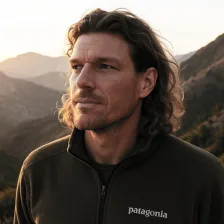
By Steven Keen
MSc candidate in Responsible Tourism Management, GSTC- and ICRT-certified.
5 min read Updated: Verified:
Discover how responsible tourism can create “better places for people to live in and better places for people to visit.” Explore evidence-based guides, learn from global frameworks like the United Nations Sustainable Development Goals, and find tours that truly make a difference.
Key Takeaways
- Responsible tourism means making “better places for people to live in and better places for people to visit”—an approach, not a certificate you can buy.
- Sustainable is the goal, responsible is the method, ethical is the conscience. This site treats them as one family of questions rather than rival brands.
- The lever is who your money reaches, not where you go: locally owned stays, local guides, shoulder seasons, longer stays in fewer places.
- It rarely costs more and often costs less. What changes is where the money lands—with the community rather than a distant shareholder.
- Everything here is free to read, published in seven languages, and cited strictly to its origin.
Three Approaches, One Goal: Better Tourism
Responsible, ethical, and inclusive tourism share common ground while emphasizing different priorities. Together, they form a comprehensive vision for travel that benefits everyone.
All three treat tourism as a human-rights matter with real duty-bearers, and aim for fair, respectful, and future-proof travel. What Responsible, Ethical, and Inclusive Tourism share is a common foundation and intent:
- Do more good than harm—for people, nature, animals, and the economy alike, recognizing their interdependence.
- Reject exploitation, harm, destruction, and instrumentalization of places, people, or culture for profit or experience.
- Ask not “how do we attract more visitors?” but instead “how do we leave this place stronger than we found it?”
One shared goal—fair, respectful, future-proof tourism—viewed through three distinct but complementary lenses.
Key topics
- Contribution to the United Nations Sustainable Development Goals (UN SDGs)
- Carbon, climate & resource use
- Community benefit—local money stays local
- Overtourism & destination management
- Measurable indicators, honest reporting
Frameworks
- UN SDGs (esp. 8, 11–15)
- Cape Town Declaration (2002)
- UN Tourism & WTTC guidelines
How do we ensure tourism doesn’t harm—but strengthens places and people, and how do we shape it so they benefit long term?
Key topics
- Labor rights, fair wages, safe conditions
- Child protection, anti-trafficking
- Animal welfare—no rides, shows, or selfies
- Cultural integrity, avoiding “human zoos”
- Transparency, anti-greenwashing
Frameworks
- UN Global Code of Ethics for Tourism
- UN Universal Declaration of Human Rights
- UN Guiding Principles on Business & Human Rights
- ILO labor conventions
- Animal welfare (Five Freedoms)
How do we ensure no one (people, animals, cultures) is exploited or harmed for our trips? Is what we are doing morally right?
More on this at ethicaltourism.com.
Key topics
- Accessibility of transport, hotels & attractions
- Universal design—for all
- Rights of persons with disabilities (UN CRPD)
- Accessible, screen-reader-friendly information
- Employment of people with disabilities
Frameworks
- UN Convention on the Rights of Persons with Disabilities (UN CRPD, Articles 9 & 30)
- UN Tourism—Accessible Tourism for All
- European & national accessibility laws
- Universal Design principles
Can every person, regardless of ability or limitation, take part on equal terms? How do we ensure everyone can participate?
More on this at inclusivetourism.com.
Where each puts its weight
| Responsible | Ethical | Inclusive | |
|---|---|---|---|
| Environment & climate | |||
| Economy & jobs | |||
| Human rights & fairness | |||
| Animal welfare | |||
| Culture & community | |||
| Accessibility & participation |
Embed this graphic
Free to embed. The embed keeps a visible credit linking back to this page.
to Be Tourists
THE FIELD GUIDE · FREE · NO EMAIL
Refuse to Be a Tourist
You can’t buy a responsible trip—you can only make one. Eleven evidence-based pages that turn responsible travel into a method you can actually use. Free and yours to keep.
Get the free guideCreating Better Places Through Travel
Tourism supports more than one in ten jobs worldwide and accounts for close to 10% of global GDP.1 But its impact goes far beyond economics. When done responsibly, tourism protects natural heritage, empowers local communities, preserves cultures, and builds bridges between people. When done irresponsibly, it can degrade environments, displace communities, and commodify cultures.
The difference is choice—yours as a traveler, and the industry’s as a whole.
What Responsible Tourism Covers
Responsible tourism is more than going green. It spans the environmental, economic, social, and cultural impact of every trip—here is what that looks like in practice.
Carbon Footprints & Eco-Transport
Tourism accounts for roughly 8–9% of global greenhouse gas emissions.2 3 We cover measurable strategies for reducing carbon footprints. Cutting tourism’s emissions is also where responsible travel most directly advances the UN SDGs.
Plastic Reduction & Water Conservation
A single resort can use more water per day than an entire village.4 We provide operational guides for eliminating single-use plastics, implementing water harvesting systems, managing waste streams, and tracking consumption metrics that matter.
Leave No Trace & Habitat Protection
Nature-based tourism must protect the ecosystems it depends on. We cover Leave No Trace principles, Natura 2000 site protocols, carrying capacity management, and how operators and travelers can fund conservation through their activities.
Local Money & Fair Wages
Tourism is one of the world’s biggest economic sectors, yet in many destinations most of the money leaks straight back out. Responsible tourism keeps it local: locally owned stays and operators, direct hiring at fair wages, and supply chains—food, guides, crafts—sourced from the community itself.
Community Voice & Well-being
Destinations are places people live, not just places to visit. Responsible tourism gives residents a genuine say in how it grows, spreads benefits beyond the crowded hotspots, protects everyday quality of life from overtourism, and supports safe and decent working conditions.
Cultural Heritage & Respect
Culture is one of the main reasons we travel—and one of the easiest things to commodify. Responsible tourism treats heritage as living and locally owned: genuine exchange over staged “human zoos,” consent before photographing people, and respect for sacred sites, customs, and traditions.
Responsibility in Practice: Case Studies
Every principle on this site is stress-tested against a real authority—a marine sanctuary, a foundation, a court, a social enterprise, and one disclosed operator on Crete. Here is a look at all five case studies, and where to read each in full.
- , read the case study
What is responsible tourism?
Chumbe Island Coral Park
A Zanzibar marine sanctuary that has run all seven principles together for three decades—funded entirely by a seven-bungalow eco-lodge.
- , read the case study
Tourism & the SDGs
The Grootbos Foundation
A South African reserve whose multi-SDG results are checked by outside bodies—from Coventry University to the Verra carbon registry.
- , read the case study
How to spot greenwashing
The District Court of Amsterdam
A landmark ruling that ran KLM’s “Fly Responsibly” campaign through the same test this guide teaches—and found it wanting.
- , read the case study
For operators
Fogo Island Inn
A Newfoundland social enterprise that prints an “Economic Nutrition” label showing exactly where every guest’s money goes.
- , read the case study
Responsible tourism on Crete
CRETAN®
The disclosed working model this resource’s author founded—a Crete operator steering the rooted euro from the saturated coast to the mountains that need it.
Frequently Asked Questions
What is responsible tourism, in one sentence?
What is the difference between responsible, sustainable, and ethical tourism?
How can I travel more responsibly without giving up the trip I want?
Does responsible tourism cost more?
I am convinced—where do I start?
Steven spent a decade making documentaries in the places tourism forgets—with his work held in the archives of the UN’s International Labour Organization—before he went to live in one: a tiny mountain village on Crete. He is completing an MSc in Responsible Tourism Management, GSTC- & ICRT-certified, and the founder of CRETAN®, which serves as a case study. Read how these pages are edited.
Where to Go from Here
What Is Responsible Tourism?
The full definition behind this overview—the Cape Town principles and how responsible differs from sustainable and ethical travel.
Responsible Tourism on Crete
The principles applied to one real island—locally owned stays, shoulder-season timing, and the two journeys your €100 can take.
Responsible Tourism for Operators
If you run tours or rooms, start here: the four pillars, GSTC certification, and the business case for responsibility.
Explore Our Companion Resources
- ethicaltourism.com Where this overview’s questions get hard—orphanage tourism, wildlife attractions, and the one question every trip must answer. (opens in new tab)
- inclusivetourism.com The dimension most frameworks skip—whether everyone can actually get there, from universal design to verified accessible trips. (opens in new tab)
- softtravel.com The traveler’s side of better tourism—why fewer places and longer stays feel calmer while you’re actually there. (opens in new tab)
References
- World Travel & Tourism Council (WTTC). 2026. Travel & Tourism Economic Impact 2025—record US$11.6tn (9.8% of global GDP) and 366 million jobs (10.9%, more than one in ten) in 2025. WTTC, in collaboration with Oxford Economics. https://wttc.org/news/travel-tourism-sees-best-year-ever,-outpacing-the-global-economy-in-2025 (accessed August 15, 2026). ↩
- Lenzen, M., Sun, Y.-Y., Faturay, F., Ting, Y.-P., Geschke, A. & Malik, A. 2018. The carbon footprint of global tourism. Nature Climate Change 8, 522–528. Nature Climate Change. https://www.nature.com/articles/s41558-018-0141-x (accessed August 15, 2026). ↩
- Sun, Y.-Y., Faturay, F., Lenzen, M., Gössling, S. & Higham, J. 2024. Drivers of global tourism carbon emissions. Nature Communications 15, 10384. Nature Communications. https://www.nature.com/articles/s41467-024-54582-7 (accessed August 15, 2026). ↩
- Gössling, S., Peeters, P., Hall, C. M., Ceron, J.-P., Dubois, G., Lehmann, L. V. & Scott, D. 2012. Tourism and water use: Supply, demand, and security. An international review. Tourism Management 33(1), 1–15. Tourism Management (Elsevier). https://doi.org/10.1016/j.tourman.2011.03.015 (accessed August 15, 2026). ↩
Further Reading
- Tourism and the Sustainable Development Goals
UN Tourism (UNWTO) · 2024 · UN Tourism
- GSTC Criteria—Industry Standards v4.0 (Hotel & Tour Operator, December 2025)
Global Sustainable Tourism Council · 2025 · GSTC
- The Cape Town Declaration on Responsible Tourism
Goodwin, H. et al. · 2002 · Responsible Tourism Partnership
- Sustainable tourism—resource efficiency and economic impacts
UN Environment Programme (UNEP) · UNEP
Our Editorial Standards
This is an independent resource, written and maintained by Steven Keen—a responsible tourism practitioner based on Crete, completing an MSc in Responsible Tourism Management and certified by the GSTC and ICRT. Every statistic is cited to its primary source, every page carries an honest last-updated date, and where a figure cannot be verified, we flag it—rather than guess. Seasonal claims are re-checked on the island as the seasons turn, and every reference carries the date it was last accessed. We disclose our connection to CRETAN®, which serves as a documented case study. Nothing here is sponsored, and the site sells nothing and takes no bookings. Claims that expire carry a review date, and this site cannot be published after that date passes until the claim has been re-read. Much of the evidence in this field is self-declared by operators and certification schemes rather than independently audited, and the pages say so where a claim rests on it. Read our full editorial standards.