Responsible Tourism on Crete: Your Guide to Sustainable Travel on Greece’s Largest Island
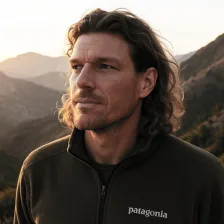
By Steven Keen
MSc candidate in Responsible Tourism Management, GSTC- and ICRT-certified.
16 min read Updated: Verified:
Crete offers dramatic gorges, ancient olive groves, sun-drenched beaches, and villages where traditions run deep. It is also an island grappling with overtourism in some areas and economic challenges in others. Here is how to explore Crete in a way that benefits its people, protects its landscapes, and enriches your experience.
Key Takeaways
- Where your money goes decides who benefits—locally owned stays and guides keep your spend on the island.
- Travel off-season to ease overtourism and spread income across the year.
- Crete rewards slow, local travel: family tavernas, village agritourism, etc.
- Choose operators and stays that hire locally, source locally, and protect the landscape.
Why Crete? An Island Shaped by Community and Nature
Crete’s identity is inseparable from its land and the people who work it. Olive cultivation has shaped the island’s economy and landscape for over 4,000 years—the monumental olive tree of Vouves, near Kolymvari, still bears fruit at an estimated age of more than four millennia.1 Family-run tavernas serve recipes passed down through generations. Village festivals—panigiria—celebrate patron saints with live Cretan music, communal feasts, and dances that every local learns as a child. The island’s culture is not a performance for tourists; it is a living tradition that continues whether visitors are present or not. Ask any kafenion table where to go and you will not get a beach; you will get a chapel, a spring, and an argument. Follow all three.
But Crete faces real pressures. The north-coast cities of Chania, Rethymno, and Heraklion absorb the majority of the island’s 5.3 million international air arrivals a year (2024)2—total visitors, counting domestic and sea arrivals, are higher. Elafonissi and Balos, two of Europe’s most photographed beaches, experience severe peak-season overcrowding—the concentration pattern UN Tourism documents across over-visited destinations.3 At Balos alone, up to 3,200 people a day are admitted in peak season, beyond the lagoon’s measured effective carrying capacity of roughly 2,400–2,9004—a pattern, and a set of residents’ rights, we examine in depth in our companion resource on overtourism. All-inclusive resorts along the coast capture tourist spending within their walls, leaving little economic benefit for the surrounding communities.5 Meanwhile, mountain villages in the interior see their young people leave for Athens or abroad, unable to build livelihoods from agriculture alone.6
Environmental threats are equally pressing. Crete hosts several Natura 2000 protected areas—from the White Mountains to the palm forest at Vai and the marine habitats along the south coast.7 Unregulated development, plastic pollution, and water scarcity from tourism demand put these ecosystems under strain. The endangered Mediterranean monk seal8—whose largest surviving population, roughly 400 individuals, lives in Greek waters9—and the Cretan wild goat (kri-kri) depend on undisturbed habitats that tourism can either protect or destroy.
Responsible tourism addresses these pressures. Staying in village guesthouses, eating at family tavernas, hiring local guides, and visiting during the shoulder season injects money into communities that need it most—the very benefit the UN SDGs were written to advance. Hiking on designated trails, choosing reef-safe sunscreen, and respecting marine protected areas preserves the natural capital that makes Crete worth visiting in the first place.
How to Travel Responsibly on Crete
Four habits do most of the work, each rooted in the principles of responsible tourism—take them on the road with our free Field Guide, a phone-ready action plan for vetting any trip, not just on Crete.
Support Local Businesses
Accommodation: Choose family-run guesthouses and locally owned hotels over international chains. Milia Mountain Retreat, a restored stone eco-village near Kissamos, is off-grid by design—solar power, wood stoves, and food from its own gardens, as the property describes its own operation; ask for its current certification before booking, as this resource asks of any operator. The Vamos Traditional Village cooperative in Apokoronas offers rooms in restored stone houses, with revenue directly supporting the village’s preservation efforts. These places do not just provide a bed—they sustain communities and keep traditional architecture alive.
Dining: Eat at traditional tavernas rather than tourist-strip restaurants with laminated photo menus. Visit the farmers’ markets that operate weekly in Chania, Heraklion, Rethymno, and Agios Nikolaos. Dounias Tavern in the Chania hills is a benchmark: the owners grow their own vegetables, forage wild greens, and cook over an open fire using recipes unchanged for generations. The difference between a meal at Dounias and a meal at a beachfront tourist restaurant is the difference between participating in a culture and consuming a simulation of one.
Shopping: Buy olive oil, honey, and wine directly from producers rather than from airport gift shops. The village of Margarites near Rethymno has working pottery studios where you can watch artisans at their wheels. Thrapsano, east of Heraklion, has been producing ceramic storage jars (pitharia) for centuries. Weaving cooperatives in Anogia create textiles using techniques that predate written history. Buying from these makers sustains craft traditions and keeps money in the local economy.
Tip: Ask “Is this locally made?” and “Who owns this business?” If the staff cannot answer, that tells you something.
Explore Nature with Minimal Impact
Hiking: Stick to marked trails in Crete’s gorges and on its mountains. The Samaria Gorge, Imbros Gorge, and Agia Irini Gorge all have established paths—Samaria’s is restored by the National Park’s management unit before the park opens each season, from the bridges and railings to the rockfall protections.10 Hiring a local guide supports the economy and keeps you safe—Crete’s terrain is rugged, and unmarked routes can be dangerous, especially in the White Mountains. Follow Leave No Trace principles: pack out everything you bring in, stay on the trail, and do not disturb wildlife or remove plants.11
Beaches: Choose beaches with basic facilities (waste bins, toilets) rather than driving to remote, unserviced coves where waste has no removal infrastructure. Use reef-safe sunscreen—look for mineral-based formulas with zinc oxide rather than chemical UV filters like oxybenzone, which harm marine ecosystems.12 Do not remove shells, stones, or sand. If you encounter injured sea turtles, report them to ARCHELON (the Sea Turtle Protection Society of Greece), which runs a 24-hour sea-turtle emergency line, rather than attempting to handle them yourself.13
Wildlife: Never feed wild animals, including the feral cats that populate many villages—well-meaning feeding disrupts ecosystems and creates dependency. Maintain a respectful distance from kri-kri (Cretan wild goats), a protected endemic emblem easily stressed by human proximity.14 In caves, never use flash photography; many caves harbor sensitive bat colonies and endemic invertebrates.
Snorkeling and diving: Do not touch coral formations or disturb marine life. Choose dive operators certified by PADI, SSI, or equivalent organizations, and ask whether they follow sustainable diving practices. Support marine protected areas by following their rules and reporting any illegal fishing or anchoring you observe.
Stay in Sustainable Accommodations
Look for properties that demonstrate genuine environmental commitment: solar panels, rainwater harvesting, locally sourced organic breakfast, elimination of single-use plastics, and employment of local staff. These are not marketing bullet points—they represent real operational decisions that cost more and require deliberate effort.
Milia Mountain Retreat was rebuilt from abandoned medieval stone houses. There is no air conditioning, no television, and limited electricity—by design. Solar panels and wood-burning stoves provide energy. Food comes from the property’s gardens and local producers.
Georgia’s Garden Hotel (near Chania) maintains an organic garden that supplies the kitchen, composts waste, and employs from the surrounding villages. Enagron Ecotourism Village (Axos, Rethymno) combines accommodation with working farm activities, cooking classes, and cultural workshops, keeping agricultural traditions alive through tourism revenue.
Where this page names a business, it is naming a place the author has been, not a certificate the author has checked—apply the same three questions to each of them that the rest of this site applies to everyone else.
Tip: Look for third-party certifications: Green Key, EU Ecolabel, and Travelife are credible standards. Properties that self-describe as “eco-friendly” without any certification may or may not back up that claim—here’s how to tell the difference.
Choose Responsible Tour Operators
What to look for: Local ownership and locally hired guides. Small group sizes (6 to 12 people). Transparent pricing that shows where the money goes. Formal partnerships with community organizations. Published environmental policies with specific, measurable commitments.
Red flags: Mass bus tours with 50 or more passengers that overwhelm small villages and leave minimal economic benefit. Operations with no local staff in guide or management roles. Off-road jeep safari tours that drive through protected areas and fragile landscapes. Vague “eco-friendly” or “green” marketing with no supporting details, certifications, or verifiable practices.
The Two Journeys of €100
Your money doesn’t leave Crete by accident—it leaves by design.5 The same €100, spent on the same island, takes a completely different path depending on the structure you book into.15
See where your money ends up:
Package · foreign-owned resort
Of €100 spent on Crete,
€80
leaves the island.
Only €20 stays.
Where it leaves to
- International airline—paid abroad.
- Foreign-owned hotel—profits repatriated.
- Imported food & drink—not from the village.
- Overseas tour operator—fees that never land.
In a typical all-inclusive package, ~80% of guest spending goes to airlines, hotels, and international companies (UN Tourism; UNEP); a foreign-owned four- or five-star resort can lose ~51–55% to leakage (Bali study, Suryawardani; Travel Foundation).
Locally owned · locally sourced
Of €100 spent on Crete,
€90
stays & recirculates.
Only €10 leaves.
Where it stays
- Locally owned guesthouse—owner lives here.
- Local guide/shepherd—wage stays in villages.
- Family taverna—buys Cretan oil, cheese, greens.
- Village cooperative—surplus reinvested locally.
Because Crete has a developed and diverse economy, its natural baseline leakage is remarkably low (~10–20%, UNCTAD). The island grows its own food and sustains local businesses. When tourists choose foreign-owned, all-inclusive packages, they bypass that local economy entirely, inflating their personal leakage to 80%.
The infrastructure to keep the money local already exists. Now you just have to use it.
Greece’s known weakness is concentration: a few hotspots capture most of the revenue while mountain villages and the off-season see little (OECD). The enclave euro concentrates; the rooted euro disperses.
Operators who hire local guides, partner with family tavernas, and reinvest in the community keep your euro on the rooted path. CRETAN®—the disclosed initiative this resource’s author founded—is built exactly this way.
Embed this graphic
Free to embed. The embed keeps a visible credit linking back to this page.
to Be Tourists
THE FIELD GUIDE · FREE · NO EMAIL
Travel Like It Matters
You can’t buy a responsible trip—you can only make one. Eleven evidence-based pages that turn responsible travel into a method you can actually use. Free and yours to keep.
Get the free guideWhen to Visit Crete Responsibly
When you visit matters as much as how you visit. Your timing affects crowding, prices, environmental stress, and whether your spending reaches the communities that need it most. This is not an abstraction here: INSETE’s destination analysis for Crete describes a tourism model marked by intense seasonality, heavy dependence on tour operators and all-inclusive packages, and development concentrated on the northern coast.16 Every choice below pushes against one of those three.
Peak Season: July and August
Everything is open. The sea is warm. Village festivals are in full swing. But the north coast is crowded, accommodation prices are at their highest, popular beaches are overwhelmed, and infrastructure—water, waste management, roads—is strained. Temperatures regularly exceed 35 °C, making midday hiking dangerous. I have watched August arrive in Chania like weather. The kindest thing a visitor can do for that town is come in October and stay longer.
If you visit in peak season: Focus on lesser-known villages in the interior and south coast. Start hikes at dawn. Avoid Elafonissi and Balos on weekends. Your best experiences will come from going where the tour buses do not.
Shoulder Season: April to June and September to October
Warm and sunny, but without the extremes. The sea is swimmable from late May through October. Wildflowers blanket the mountains in spring. Crowds thin significantly, prices drop, and local businesses have more time and energy for genuine interactions. Hiking conditions are ideal.
This is the best time for responsible tourism on Crete. Your visit provides economic support during months when businesses need it, without contributing to the peak-season strain that damages both the environment and the visitor experience. April here is the month the island belongs to everyone at once—swallows, walkers, and the last of the snow on Psiloritis; September is its echo with warmer water.
Off-Season: November to April
This is when you can truly experience authentic Cretan life. The olive harvest runs from November to December. Tsikoudia (raki) distillation happens in family-run stills across the island. Christmas and Easter celebrations are deeply felt community events. Accommodation prices are at their lowest, and you will have villages, archaeological sites, and mountain trails essentially to yourself. November here smells of raki stills and olive mash; it is the month I would send anyone who asks me when to come.
Some tourist-oriented businesses close from November to March, and ferry schedules to smaller islands become limited. But the cities remain fully alive, and many guesthouses and tavernas stay open. Off-season visitors provide year-round income to communities that would otherwise depend entirely on a five-month tourist season.16
Our recommendation: Visit between April and June, or September and October. You get the best weather, the best experiences, and your spending does the most good.
Responsible Activities and Experiences on Crete
Olive Picking and Milling Tours
The olive harvest runs from November to December. Join families at farms like Biolea Organic Olive Farm in Kolymvari to pick olives by hand and watch them pressed into oil the same day. This is not a demonstration—it is real agricultural work that feeds families and has shaped Cretan identity for millennia. I have picked in the November harvest; the surprise is not the work but the arithmetic—one tree, one family, one afternoon, and oil that follows you home for a year.
Cooking Classes
Vamos Traditional Village runs cooking workshops where locals teach visitors to prepare Cretan dishes using ingredients from the village gardens. Revenue supports the cooperative that maintains the village’s restored stone buildings and cultural programs.
Craft Workshops
Visit working potters in Margarites, weavers in Anogia, or knife-makers in Zaros. These are not tourist attractions—they are active workshops where artisans practice crafts that have been part of Cretan life for centuries. Many offer hands-on sessions where you can try the craft yourself.
Village Festivals (Panigiria)
Throughout summer, Cretan villages celebrate patron saints with multi-day festivals featuring live lyra and laouto music, communal feasting, and traditional dances. Visitors are welcome—Cretans are famously hospitable—but ask permission before photographing people and respect that this is their celebration, not a show.
Hiking and Nature Walks
Crete has gorges, mountain plateaus, coastal paths, and forest trails that rival any hiking destination in Europe. The Samaria Gorge is the most famous, but Imbros, Aradena, and dozens of smaller gorges offer equally stunning terrain with far fewer crowds. Hire a local guide who knows the flora, geology, and stories of the landscape.
Wine Tasting
The Peza and Dafnes wine regions south of Heraklion produce wines from indigenous grape varieties—Vidiano, Vilana, and Liatiko—that you will not find anywhere else. Small family wineries offer tastings and tours of their vineyards, and your visit directly sustains agricultural families who might otherwise abandon viticulture.
Beach Clean-Ups
Clean Up Crete is a grassroots organization that coordinates regular beach and mountain clean-up events across the island. Check their Facebook page for upcoming events. Joining a clean-up is one of the most direct ways to give back during your visit—and you will meet locals and fellow travelers who share your values.
Resources and Local Initiatives
The organizations and cooperatives below are doing the work of protecting Crete’s environment and culture. Supporting them—through donations, volunteer time, or simply choosing their services—amplifies the impact of your visit.
ARCHELON—Sea Turtle Protection Society of Greece
ARCHELON monitors and protects loggerhead sea turtle (Caretta caretta) nesting sites along Crete’s beaches—710 nests were protected on the island in the 2025 season alone.13 They run volunteer programs where participants help with nest monitoring, public awareness, and rescue operations. Their work on the beaches of Rethymno and Chania has been critical to the species’ survival in the eastern Mediterranean.
Clean Up Crete
A grassroots initiative organizing regular beach and mountain clean-up events across the island. Open to everyone, locals and visitors alike. Their events are social as well as environmental—a way to connect with people who care about the island’s future.
Cretan Fauna and Flora Research
Researchers studying Crete’s endemic species, including the kri-kri wild goat, the Cretan spiny mouse, and hundreds of plant species found nowhere else on Earth. Crete’s geographic isolation has produced extraordinary biodiversity that demands protection.
Community Cooperatives
Vamos S.A. is a sustainable village tourism cooperative that has restored traditional stone houses, established cultural workshops, and created livelihoods for villagers who might otherwise have left for the cities. Women’s Agricultural Cooperatives across Crete produce preserves, herbs, textiles, and other goods, providing economic independence for women in rural communities.
Letters from inside the question
The Other Side of Travel
The tourism industry is loud, crowded, and always trying to sell you something. These letters are the drive into the hills. A monthly dispatch exploring how to travel differently.
Read it before you decideCase Study: CRETAN®
Crete presents a sharp geographic divide: the coast absorbs millions of visitors a year, while its inland mountain villages are quietly emptied of people and capital. CRETAN®—the working model this resource’s author founded, disclosed here as one case study—exists to drive the rooted euro the other way: inland.
Where the money goes
- Small groups of eight, walking with local shepherds and naturalist guides—all Cretan, trained, and paid above the living wage. That is a commitment, not an audited figure: the written pay commitment and the pricing breakdown behind it are not yet published.
- Routes chosen to carry visitors and their spending inland, to the villages the coast bypasses.
- Food, transport, and supplies bought from mountain tavernas, wineries, farms, and artisans—not intermediaries.
- Revenue-sharing agreements with the villages that host a tour; the share itself is not yet published.
How it treats the land
- Hikes inside Natura 2000 protected sites, run to Leave No Trace.
- Zero single-use plastics; every guest carries a refillable bottle.
- Slow travel by design—mostly on foot and by hybrid vehicle, steered away from the crowded hotspots toward quieter inland trails.
Who it’s open to
- Wheelchair-accessible hikes on the same mountain and gorge trails, using specialized, all-terrain equipment.
- Routes measured in person—grade by grade, in centimeters, not adjectives—with the measurement date given for each route before you book.
- Same trails, same views, same group, same price: no accessibility surcharge, and no separate “special” program.
What it can prove—and what it can’t yet
Much of the above is checkable on the ground: you can meet the guide who lives down the road, eat at the taverna that keeps the money, and roll the same trail as everyone else. What CRETAN® cannot yet hand you is the paperwork that would put a number on it—a transparent pricing breakdown, an annual sustainability report, and post-tour guest surveys are targets the model is built toward, not results it can publish yet. That admission is the point: this resource holds its own case study to the test it asks you to run on every other operator.
So this page will not put a percentage on the share of each trip that stays on Crete until a pricing breakdown exists to back one. What a real answer looks like is in print elsewhere: Fogo Island Inn, run by the Canadian charity Shorefast, publishes a Shorefast-certified Economic Nutrition label17 reporting that 65% of a guest’s spending stays on Fogo Island, 13% elsewhere in Newfoundland, 19% elsewhere in Canada, and just 3% leaves the country.18 CRETAN® has no such label yet—until it does, “most of it stays here” is a claim you should refuse from us as you would from anyone else.
That is what CRETAN® exists to do: pull responsible tourism off the whiteboard and onto the ground, without pricing the land, its people, or any traveler out of the trip.
Frequently Asked Questions
When is the best time to visit Crete responsibly?
How can I make sure my money benefits local Cretans?
What should I know about Crete’s protected natural areas?
How do I avoid contributing to overtourism on Crete?
Is Crete accessible for travelers with disabilities?
Is Crete overtouristed—should I go somewhere else instead?
Steven spent a decade making documentaries in the places tourism forgets—with his work held in the archives of the UN’s International Labour Organization—before he went to live in one: a tiny mountain village on Crete. He is completing an MSc in Responsible Tourism Management, GSTC- & ICRT-certified, and the founder of CRETAN®, which serves as a case study. Read how these pages are edited.
Where to Go from Here
What Is Responsible Tourism?
The principles behind this guide—the Cape Town definition and how responsible differs from sustainable and ethical travel.
Responsible Tourism & the UN SDGs
Zoom out from one island to the global framework—how choices like your €100 advance the 17 UN goals.
Responsible Tourism for Operators
Run a guesthouse or tour here? The four pillars, measurable indicators, and the certifications guests increasingly look for.
Explore Our Companion Resources
- ethicaltourism.com The animal question this island keeps raising—turtle beaches, working donkeys, captive dolphins—and how to tell a sanctuary from an attraction before you book. (opens in new tab)
- transformationaltourism.com When a Cretan trip becomes more than a vacation—the evidence on journeys that change you, and how to design one that lasts. (opens in new tab)
- regenerativetravel.org Beyond traveling lightly here—the water ledger, dry-stone terraces, and where your euro helps restore the island’s assets. (opens in new tab)
References
- Bombarely, A., Doulis, A. G., Lambrou, K. K., Zioutis, C., Margaritis, E. & Koubouris, G. 2021. Elucidation of the Origin of the Monumental Olive Tree of Vouves in Crete, Greece—the living emblem of Cretan olive culture, with an estimated age exceeding 4,000 years; olive-oil residue on pottery from the Gerani Cave dates olive use on Crete to the 4th millennium BC, Plants 10(11), 2374. MDPI. https://doi.org/10.3390/plants10112374 (accessed August 26, 2026). ↩
- INSETE (Institute of the Greek Tourism Confederation). 2025. Crete tourism statistics—international arrivals reached about 5.3 million in 2024, making Crete Greece’s most-visited island; annual statistical bulletin. INSETE. https://insete.gr/wp-content/uploads/2025/04/Bulletin_EN_2024.pdf (accessed August 26, 2026). ↩
- UN Tourism (UNWTO), CELTH, Breda University of Applied Sciences & ETFI. 2018. ‘Overtourism’? Understanding and Managing Urban Tourism Growth beyond Perceptions (resident pressure, crowding, and the concentration of visitors in hotspots). UN Tourism. https://doi.org/10.18111/9789284419999 (accessed August 26, 2026). ↩
- Skiniti, G., Lilli, M., Skarakis, N., Tournaki, S., Nikolaidis, N. & Tsoutsos, T. 2024. A holistic approach for tourism carrying capacity estimation in sensitive ecological areas—Balos, Crete: up to 3,200 people a day accepted in peak season against an effective carrying capacity of about 2,425–2,888, Environment, Development and Sustainability 26, 31971–31995. Springer Nature. https://doi.org/10.1007/s10668-024-04805-0 (accessed August 26, 2026). ↩
- UN Environment Programme (UNEP). Sustainable tourism—economic impacts and leakage (a large share of all-inclusive package spending leaves the host economy). UNEP. https://www.unep.org/explore-topics/resource-efficiency/what-we-do/responsible-industry/tourism (accessed August 26, 2026). ↩
- Organisation for Economic Co-operation and Development (OECD). 2024. OECD Tourism Trends and Policies 2024 (tourism, rural livelihoods, and small and medium-sized enterprises; the local value retained per tourism euro). OECD Publishing. https://www.oecd.org/en/publications/oecd-tourism-trends-and-policies-2024_80885d8b-en.html (accessed August 26, 2026). ↩
- European Environment Agency (EEA). Natura 2000—the EU’s network of protected areas (Greece’s network covers about 27% of the country’s land area); Natura 2000 Viewer. European Environment Agency. https://natura2000.eea.europa.eu/ (accessed August 26, 2026). ↩
- Karamanlidis, A. & Dendrinos, P. (IUCN Red List of Threatened Species). 2015. Monachus monachus (Mediterranean monk seal)—assessed as Endangered (recategorized from Critically Endangered in 2015). IUCN. https://www.iucnredlist.org/species/pdf/45228171 (accessed August 26, 2026). ↩
- MOm—Hellenic Society for the Study and Protection of the Monk Seal. The Mediterranean monk seal, distribution—the largest population of the endangered species lives in Greece, estimated at approximately 400 individuals. MOm. https://www.mom.gr/distribution (accessed August 26, 2026). ↩
- Natural Environment and Climate Change Agency (NECCA/OFYPEKA). 2024. The Samaria Gorge opens to the public—annual reopening of the National Park after preseason work by its management unit: bridge restoration, trail maintenance, removal of hazardous trees, and upkeep of railings and rockfall-protection systems. NECCA. https://necca.gov.gr/nea/anoixe-to-faraggi-tis-samarias-2024/ (accessed August 26, 2026). ↩
- U.S. National Park Service. Leave No Trace Seven Principles—the seven principles as published by the U.S. National Park Service: “Pack it in, pack it out,” “Concentrate use on existing trails and campsites,” “Leave rocks, plants and other natural objects as you find them,” and “Observe wildlife from a distance. Do not follow or approach them.” National Park Service, U.S. Department of the Interior. https://www.nps.gov/articles/leave-no-trace-seven-principles.htm (accessed August 26, 2026). ↩
- Downs, C. A., Kramarsky-Winter, E., Segal, R., Fauth, J., Knutson, S., Bronstein, O. et al. 2016. Toxicopathological Effects of the Sunscreen UV Filter, Oxybenzone (Benzophenone-3), on Coral Planulae and Cultured Primary Cells and Its Environmental Contamination in Hawaii and the U.S. Virgin Islands. Archives of Environmental Contamination and Toxicology 70(2), 265–288. Archives of Environmental Contamination and Toxicology (Springer). https://doi.org/10.1007/s00244-015-0227-7 (accessed August 26, 2026). ↩
- ARCHELON—Sea Turtle Protection Society of Greece. Loggerhead sea turtle (Caretta caretta) conservation—nesting-beach protection projects on Crete (Rethymno, Chania, Messara Bay), with 710 nests protected on the island in the 2025 season, and a 24-hour sea-turtle emergency line. ARCHELON. https://archelon.gr/en (accessed August 26, 2026). ↩
- Hellenic Ministry of Environment and Energy (YPEN), Directorate of Forests of Chania. Samaria (White Mountains) National Park—declared in 1962; more than 450 species of the natural kingdom occur in the National Park, 70 of them endemic species and subspecies of Crete, and it is the only place in Europe where the kri-kri wild goat (Capra aegagrus cretica) lives in the wild [Greek]. Hellenic Ministry of Environment and Energy. https://ypen.gov.gr/perivallon/dasi/epithewrhseis/epitheorisi-efarmogis-politikis-kritis/dioikitiki-domi/diefthynsi-dason-n-chanion/ethnikos-drymos-samarias/ (accessed August 26, 2026). ↩
- Suryawardani, I G. A. O., Bendesa, I K. G., Antara, M. & Wiranatha, A. S. 2014. Tourism Leakage of the Accommodation Sector in Bali—a peer-reviewed measurement of income leakage (about 18.8% on average, rising with hotel class), ASEAN Journal on Hospitality and Tourism 13(1). ASEAN Journal on Hospitality and Tourism. https://doi.org/10.5614/ajht.2014.13.1.01 (accessed August 26, 2026). ↩
- INSETE (Institute of the Greek Tourism Confederation). 2021. Destination “Crete”—executive summary (Greek Tourism 2030 | Action Plans): a tourism model marked by intense seasonality, high dependence on tour operators and all-inclusive packages, and tourism development concentrated on northern Crete. INSETE. https://insete.gr/wp-content/uploads/pdf/proorismoi/executive-summary-kriti.pdf (accessed August 26, 2026). ↩
- Fogo Island Inn. Our Radical Approach—the inn is a social business and an initiative of Shorefast, a registered Canadian charity (#85883 0904 RR0001); Shorefast certified the Economic Nutrition label the inn publishes, which shows where a guest’s money goes, and all operating surpluses are reinvested on Fogo Island. Shorefast / Fogo Island Inn. https://fogoislandinn.ca/our-inn/our-radical-approach/ (accessed August 26, 2026). ↩
- AFAR. In-Depth Review of Fogo Island Inn (Economic Nutrition figures: 65% of a guest stay stays on Fogo Island, 13% elsewhere in Newfoundland, 19% elsewhere in Canada, 3% leaves the country). AFAR Media. https://www.afar.com/hotels/fogo-island-inn-newfoundland-canada-review (accessed August 26, 2026). ↩
Further Reading
- Sustainable Development—Greek tourism, the environment and sustainability; data and analysis on environmental pressure and carrying capacity
INSETE (Institute of the Greek Tourism Confederation) · INSETE
- The contribution of tourism to trade and development (Note by the UNCTAD secretariat, TD/B/C.I/8)—the origin of the leakage-by-economy figures: average leakage runs about 40–50% for developing economies but only about 10–20% for developed and more diversified ones (§26), the basis for the low baseline-leakage estimate used here
United Nations Conference on Trade and Development (UNCTAD) · 2010 · United Nations
- GSTC Destination Criteria—the international standard for sustainable management of tourism destinations
Global Sustainable Tourism Council (GSTC) · GSTC
- European Tourism Indicator System (ETIS) for sustainable destination management
European Commission · European Commission
- State of the Environment and Development in the Mediterranean (SoED 2020)—tourism pressure on Mediterranean coasts and ecosystems
UNEP/MAP—Plan Bleu · 2020 · Plan Bleu
Our Editorial Standards
This is an independent resource, written and maintained by Steven Keen—a responsible tourism practitioner based on Crete, completing an MSc in Responsible Tourism Management and certified by the GSTC and ICRT. Every statistic is cited to its primary source, every page carries an honest last-updated date, and where a figure cannot be verified, we flag it—rather than guess. Seasonal claims are re-checked on the island as the seasons turn, and every reference carries the date it was last accessed. We disclose our connection to CRETAN®, which serves as a documented case study. Nothing here is sponsored, and the site sells nothing and takes no bookings. Claims that expire carry a review date, and this site cannot be published after that date passes until the claim has been re-read. Much of the evidence in this field is self-declared by operators and certification schemes rather than independently audited, and the pages say so where a claim rests on it. Read our full editorial standards.