 |
Achlada, Crete · November 2026
The olive trees in Achlada are the heaviest I have ever seen. That is exactly the problem.
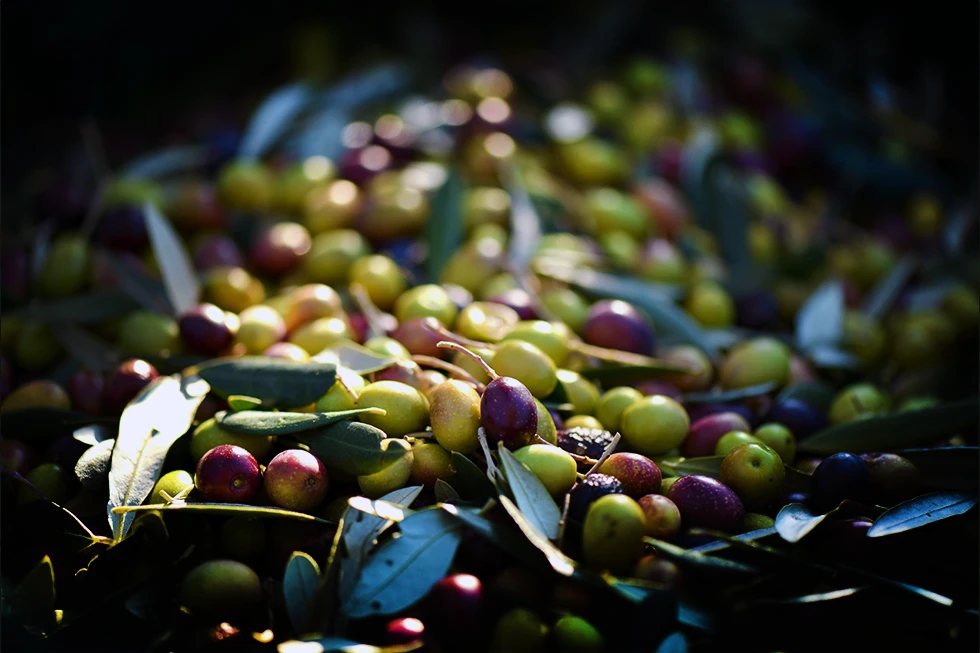
It rained for weeks this autumn, and you could almost watch the fruit drink. The olives are fat and dark now. Branches that spent two dry years reaching for nothing hang low again, bowed toward the soil, as if they were tired of holding so much weight.
Down the road, the mill is waking up. Someone swept it out this week. Wooden pallets went up against the wall in neat stacks. Last winter’s trash was carried away. The floor was cleared. Then the doors were left open, the way you leave a door open for someone you are expecting.
Once the harvest begins, the mill does not stop. From six or seven in the morning until long after midnight, the machines rumble under the whole village. Pickups back in one after another, their beds full of sacks. The air turns green and sharp, like cut grass and black pepper. And at night, when every house has gone dark, one building is still lit.
Everyone here agrees it will be a good year. But this year on Crete, a good year and a good harvest are not the same thing.
The doors are open. The question is who will walk through them.
After the drought, a bittersweet abundance.
|
| Worth knowing 100,000
That is how many tons of olive oil the Region of Crete expects this winter, nearly double last year’s 57,000. Three winters ago, in the drought, the island expected barely 30,000, and a kilo sold for more than €8.
This winter, a kilo is expected to bring about €4. Nikos Michelakis, who once ran the Chania Olive Institute, says that does not even cover what it costs to grow.
Empty trees, expensive oil. Full trees, cheap oil. The more the tree gives, the more the person under it loses.
In Heraklion prefecture alone, 15 mills will stay dark this season. In the biggest harvest in years.
Nobody is bulldozing the groves. They are simply losing their people. In the east of the island, farmers say their children no longer want the work. They take steady jobs in the hotels instead. I do not blame them.
The hotels need those children in July. The trees need them in November. July pays better.
That is how tourism reaches a grove no visitor will ever see.
Oliver Rackham and Jennifer Moody, whose book The Making of the Cretan Landscape I recommended last month, showed that this landscape was never wilderness. It was made by hand, and it is kept by hand. More than 40 million olive trees cover about 40 percent of this island. Every one of them needs someone to come back. A grove nobody returns to does not go back to nature. It goes to scrub. Then it burns.
New oil here is supposed to taste bitter. This year, so does the harvest.
Sources: Region of Crete estimate, Heraklion Olive Millers Association, and Nikos Michelakis (SEDIK), via Argophilia, October 14, 2026; 2023 producer prices, Ta Nea; 2023 Cretan production forecast, Argophilia; farm succession in Sitia, Argophilia; olive tree count and coverage, Agronews, September 2024; grove abandonment and fire risk, SEDIK via Argophilia.
| On the map
The mill, after dark.
From November into January, in olive country, follow the light and the smell of crushed fruit. The growers bring in the day’s sacks in the evening, and the oil comes off the machines green and cloudy.
Ask if you can buy some. Bring your own bottle. Ask whose oil it is, and say their name when you thank them. It will catch at the back of your throat, bitter and peppery and alive. That bite is how new oil is supposed to taste, and most visitors to this island never have it.
There is no more direct way to put money into the hand that carried the sacks.
| What I’m working on
In July, a researcher at the University of Algarve in Portugal wrote to me. Dr. Fatemeh Bagheri sits on the editorial boards of some of the most respected journals in tourism research, among them the Journal of Travel Research. She was building an international study of what a regenerative travel experience actually is, and she wanted my answers for the interviews it would grow from.
Then she asked me to take her questionnaire apart, question by question, before it went out into the world. Behind it were months of Fatemeh’s work: interviews, reading, expert review, and drafts cut down until only what mattered was left. I am in the middle of an MSc in Responsible Tourism Management and have filled in a great many surveys. This is the first one I have helped shape.
It is finished now, and it needs 600 to 700 people. And not just anyone. People whose visit left a place stronger than they found it.
If that is you, Fatemeh needs your answers. It takes 12 to 15 minutes, and it is completely anonymous.
|
Some night soon, the mill will come back to life. I will hear it before I see it: that low rumble under the village, then the light, still on when I take my dogs out for the last time.
It will mean someone looked at €4 a kilo, did the arithmetic, and carried the sacks down the hill anyway.
The mill, the grove, and a study in Portugal are waiting for the same thing. None of them works unless someone comes.
The doors are open.
 |
|