 |
Achlada, Crete · August 2026
It’s no coincidence that my first letter reaches you in the month I’d tell you not to come.
I drove down to Heraklion yesterday, along a coastal road that hugs the water the entire way. On a clear morning it is one of the great drives on the island.
Yesterday it was coaches, nose to tail, on a road with one lane each way. Safari jeeps in convoy. Quad bikes on the dirt tracks in packs of twenty-five. Jet skis and speedboats fanning out from every beach. Umbrellas as far as I could see.
All of them traveled a long way and paid a great deal to come here. What most of them will see is each other.
Then I drove forty minutes home, up into the hills, and passed almost no one. The cicadas were deafening. Bees were working the last of the thyme. The shepherd’s flock had pressed into the shade under the olive trees and would not move until evening. The mountain does not know it is high season.
Two Cretes exist at the same time, an hour apart. Most people who fly here in summer meet only one of them, then go home and say they have seen the island.
I started this letter to write about the other one. Once a month, from here. You are reading the first.
|
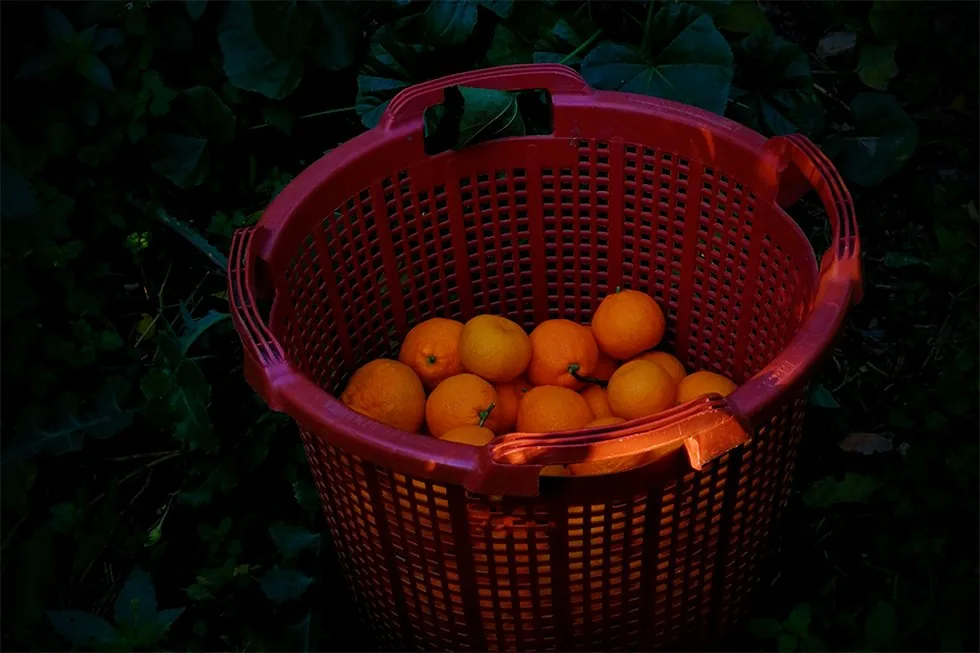
Fodele, ten kilometers from my door—a valley of orange groves.
| Worth knowing 1,096,944
That is how many people flew into Crete from abroad last July. In February, the figure was 2,859.
Same island. Same coastline, same mountains, same villages holding knowledge they have held for 4,000 years. For every traveler who arrived in February, 383 arrived in July. The only thing that changed was the month.
Worse, the gap is widening. That July figure was up 3.3 percent on the year before. February was down 23 percent.
The fault is not with the people on those flights. Almost every one of them is kind, curious, and glad to be here. It lies in the model, which decided long ago that this island is worth coming to in July and worth almost nothing in February.
The answer is not fewer people. It is other months, and other places. Crete has both in abundance. Almost nobody is selling them.
Source: INSETE, international air arrivals to Crete, January–November 2025.
| On the map
Fodele, ten kilometers from my door. Most people pass it at speed, on their way to a beach. Those who turn off find a valley of orange groves, but the fruit is just the introduction. Above the village, Fodele lays a proud, unyielding claim to one of the greatest painters in European history.
Domenikos Theotokopoulos was born in 1541 and became El Greco. The official record belongs to the capital: documents from Toledo where the painter himself swore he was born in Heraklion. The capital also holds the only two original El Grecos left on the island. But paper is fragile, and Fodele is made of stone.
The village simply ignores the archives. The house they keep as his museum stands opposite an 11th-century Byzantine chapel, guarded by a local conviction so deep it has outlasted centuries. The museum may hold only reproductions, but Fodele holds the earth. It holds the fierce Cretan light that first shaped his eyes, and a village of a few hundred that refuses to let him go.
The extraordinary hides in the places everybody drives past.
| What I’m reading The New Tourist by Paige McClanahan. I am recommending it partly because I disagree with it. McClanahan argues there is no meaningful line between a traveler and a tourist. I have built my life on the opposite belief. She reports it honestly, including her own mistakes, and it sharpened my thinking rather than softening it. Read it, and argue with me.
|
If you have found the other Crete—the village that does not know it is August—hit reply and tell me where. And if you haven’t, write to me if you’d like to find it. I reply to every email.
 |
|